
.jpg)
If you find yourself beginning your journey into the world of coffee, it can be very daunting deciding what flavour of beans are for you. The beans you sip every morning hold an incredible range of flavours — from fruity and floral to nutty, chocolaty, and even spicy. That variety isn’t an accident. It’s the result of geography and climate playing a major factor in creating each beans unique flavour. Let’s dive into why coffee tastes different, and which factors are at play.
Genetics
Coffee can be categorized into two main species, being Arabica and Robusta.Arabica is prized for complex, delicate flavours most commonly grown in Brazil, Colombia and Ethiopia. Meanwhile, Robusta has more bitterness, more caffeine, and often earthy or woody notes, with Vietnam being the worlds largest global supplier.
Soil
Water retention and mineral compositions significantly impact the final flavour.For example nutrient-rich volcanic soil (e.g., in Guatemala, Hawaii, Costa Rica) contribute to lively acidity and vibrant flavours (citrus, chocolatey, floral). In areas of high volcanic activity, the presence of Potassium and Phosphorus produce a richer taste. Meanwhile the denser the soil caused by the presence of clay, promotes heavier chocolate and nut flavours. Finally, in Sandy Soil areas failing to retain water, this stresses the coffee plant, typically resulting in more acidity in the bean.
Altitude
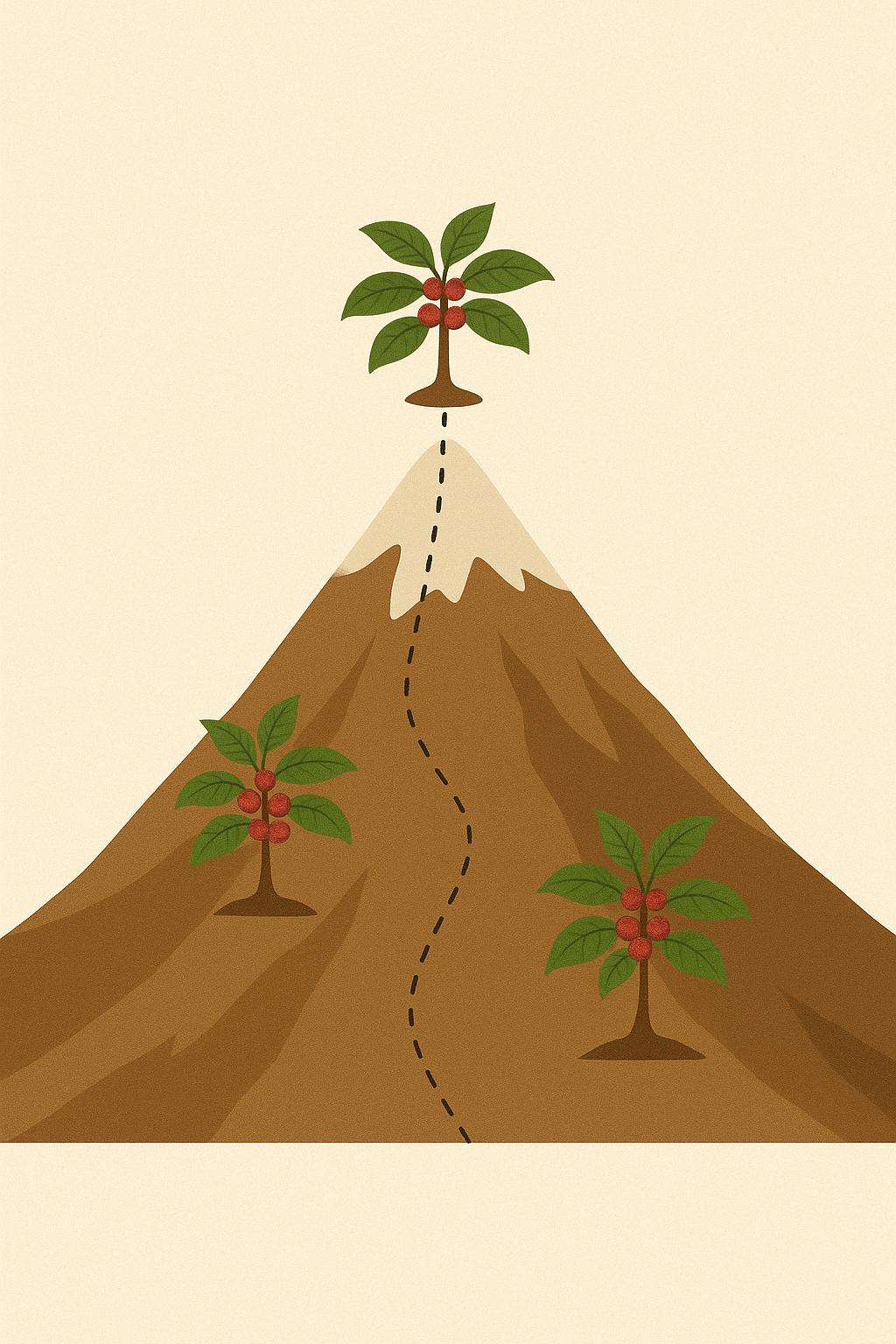
Depending on how high the plants grow, this has effects on the ripening speed of the bean.It is typically seen that coffee grown at Higher altitudes experience cooler temperatures, slowing the cherry's growth. The slower growth results in more complex sugars, resulting in brighter acidity, floral/fruity notes, and cleaner overall flavours. This is typically seen in countries such as Ethiopia, Colombia and Kenya. On the other hand, lower altitude typically speeds up the ripening process, producing simpler sugars. This gives the bean a milder, heavier-bodied, less acidic coffees with more earthy or nutty tones. This type of coffee is typically found in regions like Brazil and Indonesia.
Climate
Specifically temperature and seasons can result in the development of the bean to be delayed or premature.Cooler and stable climates favours slow growth and balanced sugar and acid development, resulting in a more complex and layered flavour. Meanwhile Hotter climates typically above 24 degrees centigrade causes coffee to mature too fast, resulting in much simpler flavours being developed. Finally, climates which have distinct Seasonal contrasts (distinct wet & dry seasons) produces uniform flowering and cherry development, resulting in consistent flavour and better quality beans. With climates becoming blurred due to climate change, coffee could very well be hindered in its quality and availablilty.